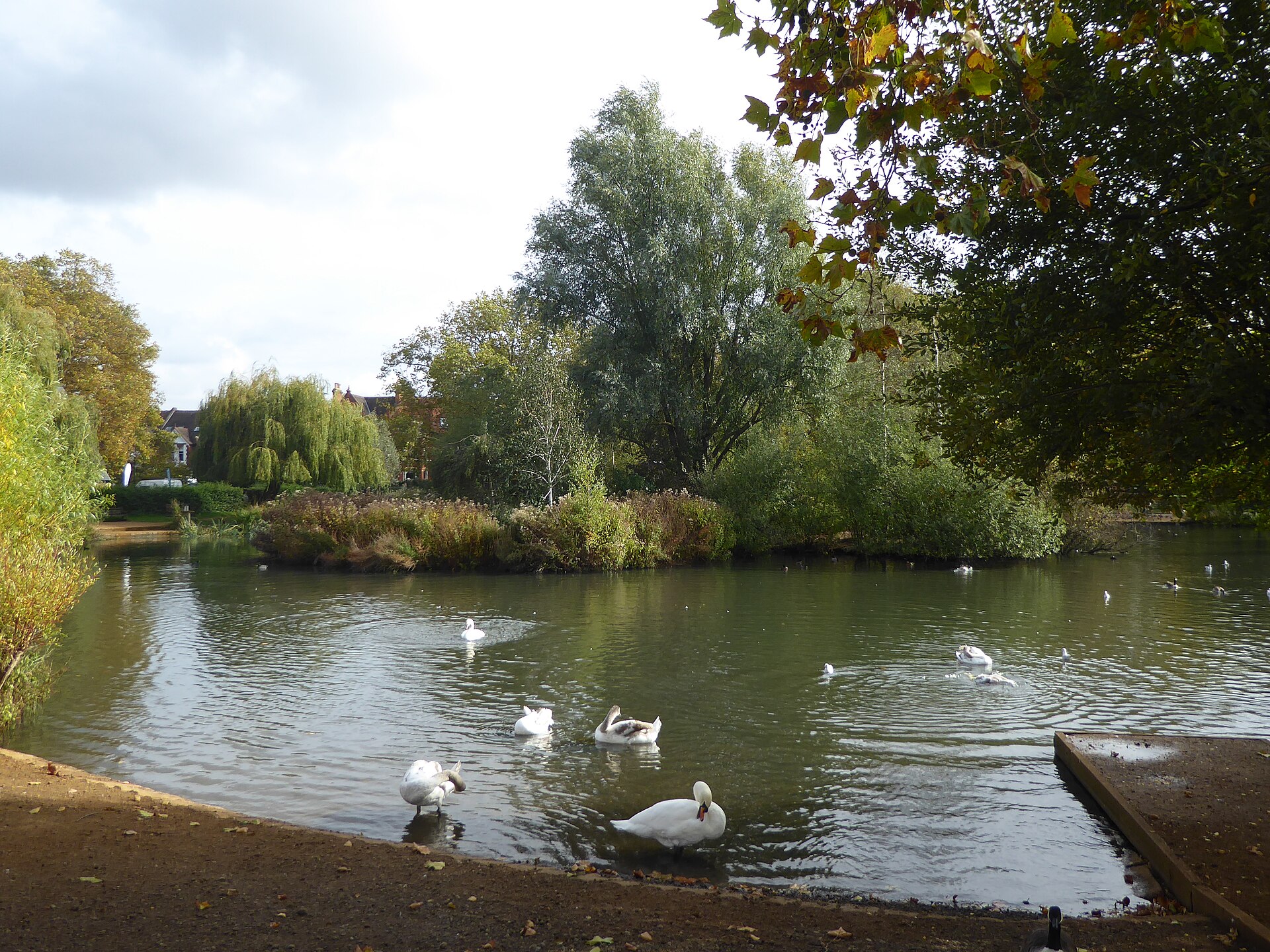
Barnes Green without its swan family is a diminished sort of green.
Barnes Pond has been without its swans since July. The resident cob and his cygnets died early in the month, and Richmond Council confirmed that dead swans and ducks on Barnes Green had been found with suspected avian botulism as the cause.
The first practical response came in the last week of July, when contractors reduced the pond's carp population. The fish were temporarily stunned with a controlled electric current, lifted out, health-checked and, where they were disease-free, rehomed to other waters. The council organised and funded the work.
The connection between the fish and the dead birds is oxygen. Carp feed by rooting through the sediment on the pond bed, pushing silt into the water and driving oxygen levels down, and it is in those low-oxygen conditions that the bacterium behind botulism produces its toxin. Warm weather and crowds of over-fed birds do the rest, which is why the council has been asking people to stop feeding the ducks and to keep pets out of the water.
A working group of the Barnes Community Association, Barnes Common and the council is now weighing longer-term measures: an aerator for the pond, and oxygenating planting. No timetable for either has been published, and neither the council nor the association has said how many carp came out, how many birds died, or what the operation cost.
Taking the carp out treats a cause rather than a symptom, and it is the right first move. It is also only a first move: the water is no better oxygenated today than it was in June, and the conditions that emptied the pond of swans will return with the next hot spell. Barnes Green without its swan family is a diminished sort of green. The question for the autumn is whether the aerator and the planting are agreed and in place before next July, or whether the working group is still deliberating when the weather turns.
- Contractors removed carp from Barnes Pond during the last week of July 2026
- Richmond Council organised and funded the cull, according to the Barnes Community Association
- Avian botulism killed birds at the pond in July 2026, including the resident cob and his cygnets
- Carp feeding disturbs sediment, lowering oxygen and encouraging the bacterium that produces botulism toxin
- Fish were stunned, health-checked and rehomed if disease-free rather than culled outright
- Richmond Council advised residents not to feed pond birds and to keep dogs out of the water
- No figures have been published for total bird deaths, carp removed, or the cost of the operation
- A BCA, Barnes Common and council working group is considering a pond aerator and oxygenating plants, with no timeline given
Every factual claim in this story is linked to the evidence behind it. Where the newsroom has added judgement or framing, it is listed separately. Sources accessed 8 September 2026.
- First step taken to improve the health of Barnes Pond (community)
- Update on Barnes Pond, July 2026 (community)
- Avian botulism at Barnes Pond (council)
- Carp removal at Barnes Green Pond (Facebook post) (council)
Claim by claim (7 facts, 7 editorial judgements)
- Contractors reduced Barnes Pond's carp population during the last week of July 2026 as part of a wider programme of ecological improvements. — community, 2026-08-04“During the last week of July, an important first step in restoring the health of Barnes Pond got underway, with contractors reducing the pond's carp population as part of a wider programme of ecologic”
- Carp disturb sediment when feeding, raising silt and lowering oxygen, which can create conditions favourable to Clostridium botulinum toxin production. — community, 2026-08-04“As they feed, carp disturb the sediment on the pond bed, increasing the amount of silt in the water which in turn reduces oxygen levels in the water and can create conditions that encourage bacteria s”
- Fish were stunned with a controlled electric current, removed, health-checked, and rehomed to other waters if disease-free. — community, 2026-08-04“temporarily stunned using a controlled electric current before being removed from the pond, health-checked and, if disease-free, rehomed to other suitable waters”
- Richmond Council organised and funded the carp removal. — community, 2026-08-04“we are grateful to Richmond Council for organising and funding this important first step”
- Avian botulism killed birds at Barnes Pond in July 2026 including the resident cob and his cygnets. — community, 2026-07-24“Avian botulism is cited by Richmond Council and the Swan Sanctuary as the most likely cause of the deaths, including those of our cob - male swan - and his cygnets.”
- Richmond Council confirmed suspected avian botulism in dead swans and ducks at Barnes Pond and advised against feeding birds or letting pets in the water. — council, 2026-07-02“some dead swans and ducks at Barnes Pond have been found with suspected avian botulism as the cause”
- A working group of the BCA, Barnes Common and Richmond Council is considering longer-term measures including a pond aerator and oxygenating plants. — community, 2026-07-24“botulism toxin is released in low oxygen conditions”
- Judgement: Neither the council nor the BCA has published figures for total bird deaths, number of carp removed, or the cost of the cull.
- Judgement: The connection between the fish and the dead birds is oxygen (framing of the carp-botulism link).
- Judgement: Taking the carp out treats a cause rather than a symptom, and it is the right first move.
- Judgement: It is also only a first move: the water is no better oxygenated today than it was in June, and the conditions that emptied the pond of swans will return with the next hot spell.
- Judgement: Barnes Green without its swan family is a diminished sort of green.
- Judgement: The question for the autumn is whether the aerator and the planting are agreed and in place before next July, or whether the working group is still deliberating when the weather turns.
- Judgement: Neither the council nor the association has said how many carp came out, how many birds died, or what the operation cost.
